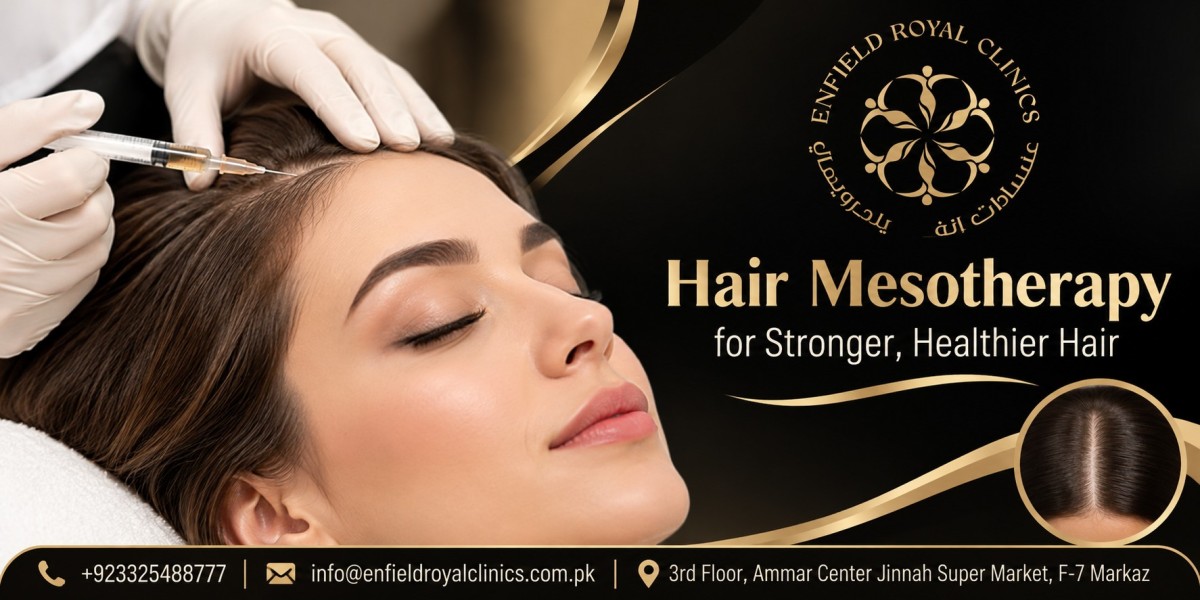

A healthy scalp creates a supportive environment for stronger-looking hair. However, factors such as stress, nutritional deficiencies, hormonal changes, genetics, and certain scalp conditions can affect hair quality and growth. When the scalp becomes irritated, dry, or unhealthy, people may notice increased shedding, thinning, or changes in hair texture. Hair Mesotherapy Treatment is one option that some individuals explore as part of a broader hair-care and hair-loss management plan.
Hair Mesotherapy Treatment in Islamabad involves delivering selected substances into the scalp through small injections. Depending on the formulation, these substances may include vitamins, minerals, amino acids, peptides, antioxidants, or other ingredients. The treatment is intended to support the scalp, although its effectiveness can vary, and scientific evidence for consistent hair-regrowth results remains limited.
Understanding how the procedure works, what it may offer, and what results can realistically be expected helps individuals make informed decisions.
1. What Is Hair Mesotherapy Treatment and How Does It Work?
Hair mesotherapy is a minimally invasive procedure in which a practitioner administers small injections into selected areas of the scalp. The ingredients used depend on the treatment approach and the individual's needs. Unlike ordinary hair oils or topical products, mesotherapy delivers its formulation directly into the scalp tissue.
The main purpose is to provide selected nutrients or other substances to the treated areas. Some formulations are designed to support scalp condition and hair health, but there is no single standardized formula used by every practitioner. The ingredients, concentration, injection depth, and treatment schedule may differ.
Before recommending the procedure, a proper assessment is important. Hair thinning can develop for several reasons, and mesotherapy may not address the underlying cause. For example, genetic hair loss, thyroid problems, iron deficiency, and inflammatory scalp conditions require different approaches.
2. How Can Hair Mesotherapy Revitalize the Scalp?
Scalp health is an important part of overall hair care. An uncomfortable or irritated scalp can make hair management difficult, while dryness and inflammation may contribute to discomfort. Hair mesotherapy is intended to introduce selected ingredients into the scalp, which may be considered when developing an individualized treatment plan.
Its potential role in scalp care may include the following areas:
Nutrient delivery: Certain formulations contain vitamins, minerals, and amino acids that are involved in normal cellular functions.
Scalp condition: Some ingredients are selected with the aim of supporting the general condition of the treated skin.
Hair-care support: The procedure may be explored alongside other treatments when a person experiences thinning or changes in hair quality.
Individualized treatment: The formulation and treatment areas can be selected according to the person's scalp condition and hair concerns.
However, these intended benefits should not be confused with proven outcomes. There is currently limited high-quality evidence showing that mesotherapy reliably improves scalp health or produces significant hair regrowth in every patient.
3. What Scalp and Hair Concerns May Benefit From Mesotherapy?
People experiencing hair thinning or changes in scalp condition may ask whether mesotherapy is suitable for their concerns. The answer depends on the cause, severity, and overall condition of the scalp.
Some individuals explore Hair Mesotherapy Treatment for:
Early hair thinning: People noticing reduced hair density may consider it as one possible part of a wider hair-management plan.
Weak-looking hair: Changes in hair appearance can sometimes occur alongside nutritional or health-related concerns. Identifying the cause is important before selecting a treatment.
General scalp-care concerns: Individuals interested in supporting their scalp condition may discuss the procedure with a qualified professional.
Certain types of hair shedding: Hair shedding can be associated with stress, illness, hormonal changes, nutritional deficiencies, or medications. Mesotherapy should not replace investigation of these possible causes.
It is important to understand that the procedure cannot reliably restore follicles that have been permanently destroyed. It may also be unsuitable as a standalone approach for advanced genetic hair loss or certain medical scalp conditions.
4. What Happens During a Hair Mesotherapy Session?
The process usually begins with a consultation and scalp examination. The practitioner reviews the individual's medical history, hair-loss pattern, current medications, allergies, and previous treatments. This step helps determine whether mesotherapy is appropriate or whether another treatment is more suitable.
If the procedure is considered appropriate, the scalp is cleaned, and the selected formulation is prepared. Small injections are then administered into the targeted areas using an appropriate technique. The session length depends on the size of the treatment area and the method being used.
Some people experience mild discomfort, a stinging sensation, or temporary tenderness during the injections. The level of discomfort varies between individuals.
After the session, the practitioner provides instructions about scalp care and activities to avoid temporarily. Following these recommendations can help reduce irritation and support proper recovery.
5. What Results Can Individuals Realistically Expect?
Results from hair mesotherapy are not the same for everyone. Some individuals may report improvements in how their scalp feels or how their hair looks, while others may notice little or no change. Scientific research has not yet established a consistent level of effectiveness for hair regrowth or scalp revitalization.
Several factors can influence the outcome:
The underlying reason for hair thinning
The person's scalp condition
The ingredients used in the formulation
The severity and duration of hair loss
Overall health and nutritional status
Whether other suitable treatments are being used
Hair growth is a gradual process, so immediate changes should not be expected. There is also no universally established number of sessions or guaranteed timeline for results.
A professional may recommend tracking hair density and scalp condition through consistent photographs or clinical assessments. This makes it easier to evaluate whether the treatment is providing any meaningful benefit.
6. Safety, Side Effects, and Aftercare Considerations
Although hair mesotherapy is minimally invasive, it still involves injections and carries potential risks. Common temporary effects may include redness, mild swelling, tenderness, bruising, or irritation around the injection sites.
Less common complications can include infection, allergic reactions, or more significant inflammation. The risk may depend on the ingredients, injection technique, hygiene standards, and individual medical history.
People with an active scalp infection, known allergies to proposed ingredients, bleeding disorders, or those taking blood-thinning medication should discuss their circumstances before undergoing the procedure. A qualified practitioner should review relevant health concerns before treatment.
Aftercare instructions may include:
Keeping the scalp clean according to the practitioner's advice.
Avoiding unnecessary scratching or rubbing of treated areas.
Delaying harsh chemical treatments until the scalp has settled.
Following guidance about washing, exercise, and hair products.
Avoiding unapproved products that could irritate the injection sites.
Increasing pain, spreading redness, unusual swelling, fever, or discharge should be assessed promptly because these symptoms may indicate a complication. Severe allergic symptoms require emergency medical attention.
7. Why Is Professional Assessment Important Before Treatment?
Choosing a treatment based only on visible hair thinning can lead to disappointing results. Hair loss is a symptom rather than a single condition, and its cause needs to be understood before a treatment plan is selected.
A professional assessment may include a scalp examination, review of family history, discussion of recent health changes, and blood tests when a deficiency or medical condition is suspected.
For example, genetic hair loss may require evidence-based options such as topical minoxidil or, for suitable patients, prescription medication under medical supervision. Hair shedding linked to iron deficiency or thyroid problems requires attention to the underlying issue. Scalp infections and inflammatory conditions also need appropriate treatment.
Individuals considering Hair Mesotherapy Treatment in Islamabad should ask about the exact ingredients, expected benefits, possible risks, practitioner qualifications, and available evidence. They should also understand what alternatives may be more suitable for their particular condition.
Frequently Asked Questions
1. Does hair mesotherapy improve scalp health?
The procedure is intended to deliver selected ingredients into the scalp, and some people explore it as part of scalp care. However, strong scientific evidence confirming consistent improvements in scalp health is limited.
2. Can hair mesotherapy reduce hair thinning?
Some individuals consider it for early thinning, but results are unpredictable. The effectiveness depends on the cause of hair loss, and it should not replace appropriate treatment for an underlying medical condition.
3. Is hair mesotherapy painful?
Most people describe the sensation as mild stinging, pinching, or discomfort during injections. Sensitivity varies, and temporary tenderness may occur afterward.
4. How many hair mesotherapy sessions are required?
There is no universally established treatment schedule. The number of sessions depends on the formulation, treatment approach, and individual assessment. A practitioner should explain the proposed schedule and its limitations.
5. Are there side effects of hair mesotherapy?
Possible side effects include redness, swelling, bruising, tenderness, and irritation. Infection and allergic reactions are less common but possible, making proper hygiene and professional assessment essential.
6. Is hair mesotherapy suitable for everyone?
No. People with certain scalp conditions, allergies, bleeding problems, or other medical concerns may not be suitable candidates. A consultation helps determine whether the procedure is appropriate.