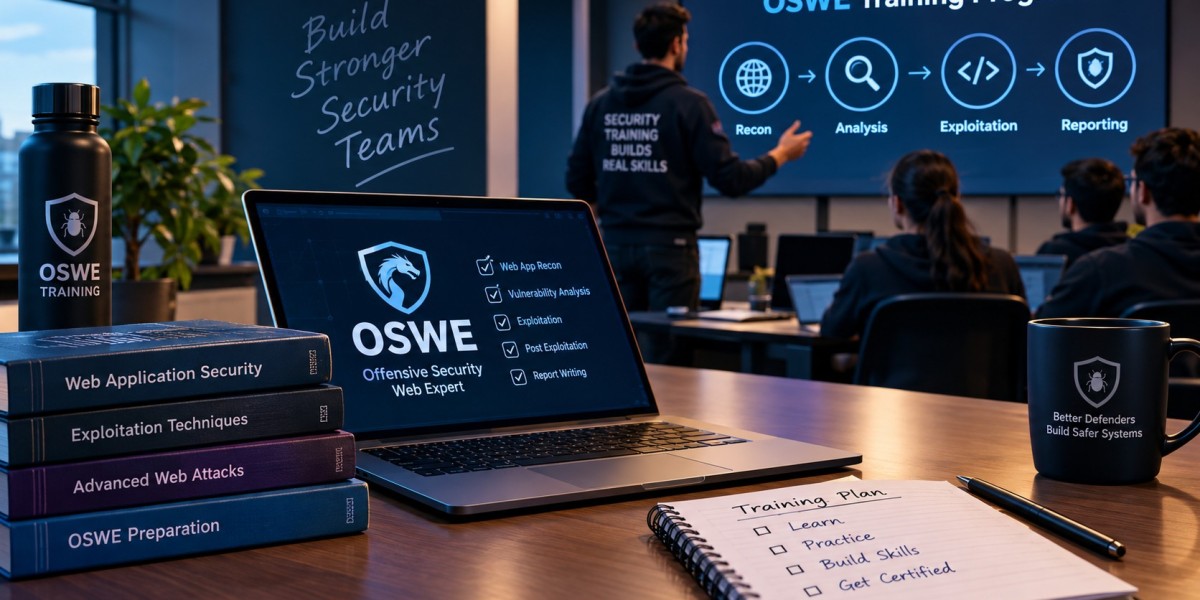

An effective OSWE training program for a security team starts by assessing baseline readiness, defines clear success metrics beyond pass rate, structures a curriculum that moves from sourcereview fundamentals through whitebox practice to mock exams, selects tooling and an OSWE training platform that scales across the team and tracks individual progress alongside programwide ROI.
Certifying one engineer in OSWE is a personal study project. Certifying a team or building the underlying advanced web application security skill across your organization, whether or not everyone sits the exam, is a program and it needs the same deliberate structure any training program requires assessment, curriculum, tooling, tracking and a defined measure of success. This guide walks through building that program from the ground up.
Why Enterprises Invest in OSWE Training Programs
Security leaders typically pursue OSWEaligned training for one of two reasons: certifying specific engineers who need the credential for client facing or compliance purposes, or building whitebox source review and exploit development capability across an application security team regardless of certification outcomes. Both goals benefit from the same underlying program structure, since the skill being built reading unfamiliar code well enough to find and chain a vulnerability is identical whether or not the engineer ultimately sits the exam.
Step 1Assess Team Readiness Before Choosing an OSWE Training Platform
Before committing a budget to any specific course or platform, run a short baseline assessment across the teamcomfort reading code in your organization's primary languages, prior blackbox testing experience, and familiarity with the specific vulnerability classes OSWE covers. This assessment determines how much runway you'll need before the team is ready for examlevel material, and it prevents the common mistake of purchasing licenses for a platform that assumes a baseline your team doesn't yet have. A detailed walkthrough of what actually matters when evaluating an OSWE preparation platform whitebox depth, exam realism, reportwriting support is worth reviewing at this stage, since the same evaluation criteria apply whether you're buying one seat or twenty.
Step 2Define Program Goals and Success Metrics
Certification pass rate is an easy metric to default to, but it's an incomplete one for a program built around building real capability. Consider defining success across at least three dimensions: individual certification outcomes (for engineers pursuing the credential), measurable improvement in internal code review findings (are engineers who complete the program catching more real vulnerabilities in production code review?), and time to competency (how long does it take a new team member to reach a defined proficiency bar). Programs measured only on pass rate tend to optimize for exam passing tricks rather than durable skill, which shows up later as inconsistent code review quality across the team.
Step 3 Structuring a Curriculum Fundamentals, WhiteBox Practice, Mock Exams
A team curriculum should move through three phases, mirroring individual preparation but built for group pacing and shared tracking.
Phase one source review fundamentals. Every engineer, regardless of prior experience, should build comfort with manual code review before touching syllabus specific material. Structured source code review labs that present full, realistic codebases give engineers a shared, consistent starting point rather than everyone practicing on whatever open source project they happen to find.
Phase two syllabus aligned whitebox practice. Once fundamentals are solid, move the group through the same vulnerability classes WEB300 covers deserialization, SSTI, authentication bypass, blind SQL injection, and file upload bypasses using full application web hacking labs so the whole team is practicing against realistic, complete targets rather than isolated snippets.
Phase three mock exams. In the final weeks before any real exam attempts, run timed, individual mock exams against unfamiliar full codebase targets, including a required written report component, so engineers experience the actual shape of the assessment technical exploitation plus documentation before it counts.
Step 4Selecting Tooling and Platforms for TeamWide Access
Standardize tooling across the team early, rather than letting each engineer assemble their own kit. At minimum this means a shared license or account structure for Burp Suite across the team, plus consistent access to full codebase practice targets like a shared SQL injection lab environment so everyone is training blind extraction technique against the same baseline difficulty. Consistency here also makes it easier to compare progress across engineers, since everyone is working from the same tooling and the same target set.
Step 5Tracking Engineer Progress at Scale
For a single learner, a personal notebook works fine. For a team, you need something more systematica shared tracker recording which vulnerability classes each engineer has practiced, time to completion trends, and specific sticking points flagged during code review of their practice writeups. This kind of tracking surfaces patterns fast if half the team is consistently slow on deserialization specifically, that's a signal to run a dedicated group session on that class rather than assuming individual practice will close the gap. The underlying patterns worth watching for are the same ones covered in broader guidance on application security challenges developers facea small number of recurring flaw types account for most realworld findings, and tracking gaps against that list is more useful than tracking raw challenge counts.
Running the Program in Cohorts vs. Rolling Enrollment
Decide early whether the program runs as fixed cohorts, a group of engineers moving through the curriculum together on a shared schedule or as rolling, selfpaced enrollment where individuals start whenever capacity allows. Cohortbased programs make peer learning and shared mockexam scheduling easier, since everyone is working through similar material at a similar pace, and they simplify tracking because you're comparing engineers against the same timeline. Rolling enrollment scales better for larger or geographically distributed teams and accommodates engineers joining the security function at different times, but it requires more individualized tracking since there's no shared cohort baseline to compare against. Many programs land on a hybrid rolling enrollment into the fundamentals phase, with cohort based mock exams scheduled quarterly so engineers still get some shared, comparative practice before any real exam attempt.
Handling Skill Variance Within a Single Cohort
Even after a baseline assessment, cohorts rarely arrive with genuinely uniform skill. Some engineers will move through source review fundamentals faster than others, and rigidly pacing the whole group to the slowest member wastes the stronger engineers' time, while pushing everyone to the fastest member's pace leaves others behind before they are ready for syllabus level material. A workable compromise is a shared minimum curriculum with optional accelerated tracks engineers who clear fundamentals early move into syllabus aligned practice sooner, while the group still reconvenes for mock exams and shared review sessions. This keeps the cohort structure's benefits without forcing a uniform pace that doesn't match reality.
Building a Culture of Secure Code Review Beyond Certification
The most durable outcome of an OSWEaligned training program isn't the certificates themselves, it is a team that reads code more carefully as a matter of habit, in daytoday code review as well as dedicated security assessments. Reinforce this by folding practice derived findings and habits back into your team actual code review process, and by treating documentation quality in that process as seriously as the technical finding, consistent with general web security best practices around clear, reproducible reporting.
Measuring ROIFrom Training to Real Findings
Beyond certification outcomes, the clearest ROI signal for an OSWEaligned program is a measurable increase in the depth and accuracy of internal code review and web application security testing findings over time. Track this by comparing the rate and severity of vulnerabilities caught in internal review before and after the program, for the same engineers. A program that improves certification pass rate but shows no change in daytoday review quality is worth reexamining; it may be optimizing for exam mechanics rather than the underlying skill.
Complementary ProgramsInternal CTFs and Bug Bounty Exposure
Some organizations extend team capability further by supporting engineer participation in external practice, including bug bounty hunting, which builds independent, self directed assessment skills against live, unfamiliar targets outside the structured curriculum. Internal CTF events built around your own application stack can serve a similar purpose at lower risk, while reinforcing the specific codebases your team actually works with.
Getting Manager BuyIn for the Program
Programs that skip the step of securing explicit manager and leadership buyin tend to lose momentum once daytoday project pressure returns. Frame the program in terms leadership already tracks reduced time spent on avoidable vulnerabilities found late in the development cycle, stronger client facing credibility for engagements that require certified testers, and reduced onboarding time for new hires once a structured curriculum exists. Set explicit expectations about time allocation up frontengineers need protected practice hours, not just permission to study on their own time, or the program will consistently lose out to whatever project is most urgent that week.
Revisiting and Updating the Curriculum Over Time
Treat the curriculum as a living document rather than something built once and left alone. As OffSec updates the WEB300 syllabus, or as your team's own application stack shifts toward new frameworks, revisit the curriculum at least annually to confirm it still reflects both the current exam content and the vulnerability classes your engineers actually encounter in production code. Programs that go stale tend to keep training engineers on vulnerability patterns that were common several years ago while missing newer patterns showing up in current frameworks a gap that's easy to avoid with a scheduled annual review built into the program from the start.
Conclusion
Building an OSWE training program for a security team is a different exercise than supporting one engineer through personal study. It requires baseline assessment, clearly defined success metrics beyond pass rate, a phased curriculum, standardized tooling, systematic progress tracking, and a deliberate budgeting decision between official and third party resources. Done well, the program outlasts any individual certification cycle, building a teamwide habit of careful source code review that shows up in daytoday work long after the exam. Review the current practice tracks on the AppSecMaster when you're ready to scope tooling and access for your team.
Frequently Asked Questions (FAQs)
How long does it take to build an OSWEaligned training program from scratch?
Expect four to six weeks to run baseline assessments, select tooling and a platform, and structure a curriculum before the team starts formal practice. The training cycle itself typically runs three to six months per cohort, depending on starting skill level and how much practice time engineers can dedicate weekly.
Should every engineer on the team actually sit the OSWE exam?
Not necessarily. Many organizations run the full curriculum fundamentals through mock exams for the whole team to build capability, while reserving the actual exam attempt (and its cost) for engineers who need the credential specifically, such as those on clientfacing assessment work.
What is the biggest mistake teams make when scaling OSWE training?
Skipping the baseline assessment and assuming uniform starting skill across the team. Engineers arrive with very different comfort levels in source code review and different language fluency, and a curriculum pitched to the most experienced engineer will lose everyone else.
How do we measure whether the program is actually working, beyond exam pass rate?
Track internal code review findings rate and severity for program participants before and after training, and compare time to competency across cohorts as you refine the curriculum. Certification outcomes are one signal among several, not the sole measure of success.
Is it worth building an internal CTF instead of buying a third party platform?
They serve different purposes and work well together, rather than functioning as competing options for the same budget line. An internal CTF built around your own application stack reinforces code base specific knowledge, while a thirdparty platform with syllabusaligned, fullcodebase challenges builds the general whitebox skill the OSWE exam itself tests. Most mature programs eventually use both, layering internal stack familiarity on top of broader, syllabus driven practice.