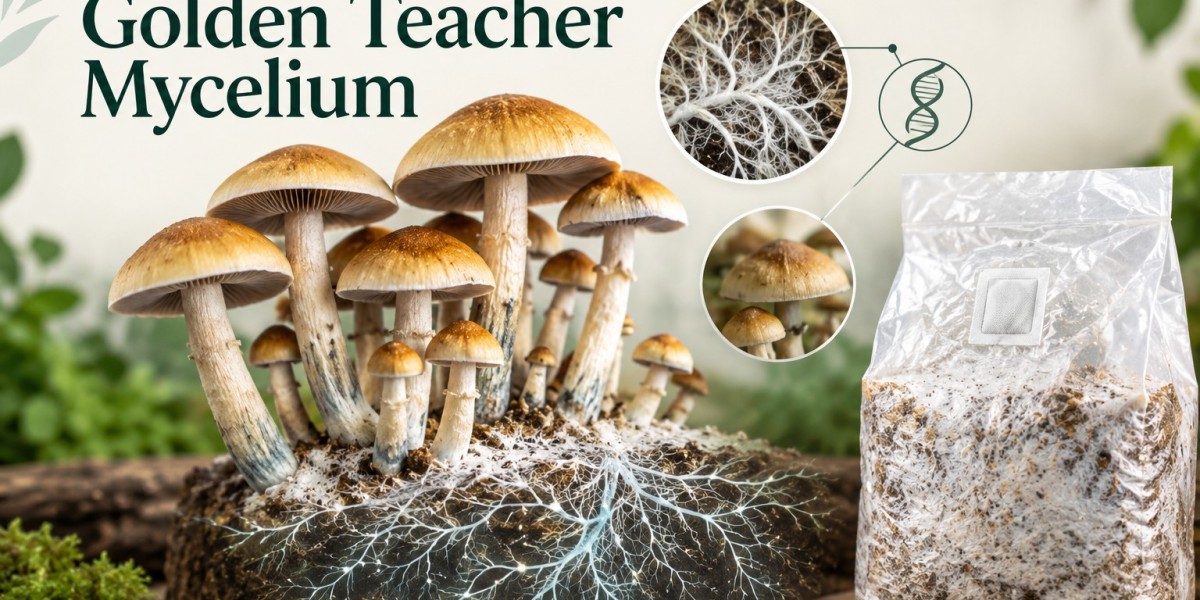

Understanding mushroom genetics can make mycology easier to appreciate, especially when studying how different strains develop distinct characteristics. A mushroom ready to grow kit can provide a structured introduction to mushroom-growing concepts, while learning about genetics, mycelium, substrates, and environmental conditions helps readers understand what is happening beneath the surface. Golden Teacher is often discussed in mycology communities as an example of how named mushroom varieties can become associated with recognizable characteristics and cultivation systems.
Understanding Mushroom Genetics
Mushroom genetics refers to the inherited biological characteristics that influence how fungi develop and interact with their surroundings. Just as genetics contributes to differences among plants and animals, fungal genetics can affect growth patterns, structure, environmental responses, and other observable traits.
When discussing a named mushroom variety, it is useful to distinguish genetics from growing conditions. A mushroom's development is influenced by both its inherited characteristics and its environment. Temperature, moisture, available nutrients, air exchange, and cleanliness can all affect how fungal growth appears.
Why Genetics Matter in Mycology
Genetics provides the biological foundation for studying differences between fungal cultures. Researchers and hobbyists can observe characteristics such as colonization patterns, fruiting behavior, morphology, and environmental tolerance without assuming that every culture will perform identically.
This is particularly important because a variety name does not necessarily describe one perfectly uniform genetic population. Fungi can exhibit variation, and different cultures associated with the same common name may not behave exactly alike. Understanding this distinction encourages more careful observation and more realistic expectations.
What Is Golden Teacher Mycelium?
Golden Teacher mycelium refers to the vegetative network of fungal tissue associated with the variety commonly called Golden Teacher. Mycelium consists of fine structures called hyphae, which grow through a suitable food source and form an interconnected network.
Rather than thinking of a mushroom as beginning with the visible cap and stem, it is more accurate to view the visible mushroom as one stage of a much larger fungal life cycle. Mycelium represents an important part of that cycle and is responsible for exploring and utilizing its surrounding substrate.
The Role of Mycelium
Mycelium plays several important biological roles. It expands through available organic material, releases enzymes that help break down complex compounds, and absorbs nutrients that support continued fungal development.
This network can also respond to environmental changes. When conditions change, fungal growth may slow, accelerate, or alter its appearance. These responses demonstrate why environmental management is an important subject within mycology.
Studying mycelium therefore provides a useful way to understand fungi beyond the appearance of the final mushroom. It connects genetics, nutrition, environmental conditions, and fungal development into a single biological system.
Ready-to-Grow Systems and Mycology
Ready to grow mushroom blocks are designed around the idea of providing a prepared growing medium rather than requiring the user to develop every component independently. From an educational perspective, these systems can help illustrate how fungal mycelium interacts with a prepared substrate.
Prepared systems also demonstrate the importance of consistency. When a growing medium has already been formulated, some variables can be reduced, allowing the observer to focus more closely on fungal development and environmental responses.
Why Prepared Substrates Are Useful
Substrate preparation is an important part of mushroom biology because fungi require appropriate nutrients, moisture, and structure to develop successfully. A prepared substrate demonstrates these principles without requiring every stage of substrate formulation to be performed independently.
For learners, this can make it easier to recognize relationships between the growing medium and fungal behavior. It also reinforces the idea that successful mycology depends on maintaining suitable biological conditions rather than relying solely on genetics.
Exploring Ready-to-Grow Mushroom Kits
A ready to grow mushroom kit represents another approach to learning about fungal development through a prepared cultivation system. Such kits can combine several components into a convenient format, allowing users to observe the progression from established fungal growth toward later stages of development.
From an educational standpoint, kits are particularly useful because they make the fungal life cycle easier to observe. Instead of concentrating exclusively on preparation, learners can pay attention to visible changes and compare those changes with information about fungal biology.
Observing Growth Responsibly
Observation is one of the most valuable aspects of studying mushrooms. Changes in appearance, texture, density, and development can provide clues about how fungi respond to their surroundings.
Keeping basic notes can also improve understanding. Recording general observations over time allows learners to compare development with environmental changes and identify patterns. This approach turns mushroom growing from a purely practical activity into a broader study of fungal biology.
Mycobag Systems and Consistency
A mycobag is commonly associated with a bag-based approach to mushroom cultivation in which the growing medium and fungal culture are contained within a suitable growing system. From a mycology perspective, this format demonstrates how fungi can develop within a controlled physical environment.
Bag-based systems can also help illustrate the relationship between containment and environmental management. The physical structure of the growing container influences factors such as moisture retention, exposure to the surrounding environment, and visibility of fungal development.
Understanding the Growing Environment
The growing environment is just as important as the genetics being studied. Even genetically similar fungal cultures can show different development when exposed to different environmental conditions.
Important concepts include moisture balance, temperature, air movement, cleanliness, and light exposure where relevant to the species. Rather than viewing these factors separately, it is useful to understand them as parts of one interconnected system.
For educational purposes, this systems-based approach encourages better observation and reduces the assumption that genetics alone determines the final outcome.
Genetics, Environment, and Variation
One of the most important lessons in mycology is that genetics and environment work together. Genetics provides biological characteristics, while environmental conditions influence how those characteristics are expressed.
This explains why two cultures associated with the same named variety may not necessarily develop in precisely the same way. Differences in culture history, substrate characteristics, environmental conditions, and other variables can contribute to variation.
Building Better Mycology Knowledge
Learning the terminology of mycology can make technical information easier to understand. Terms such as mycelium, hyphae, substrate, culture, colonization, and fruiting describe different parts of fungal biology and development.
Reliable observation is equally important. Instead of assuming that every visual change has one explanation, learners can compare observations with established mycology resources and consider multiple environmental factors.
This approach creates a stronger foundation for anyone interested in mushroom genetics and fungal biology.
Responsible Cultivation and Legal Considerations
Mushroom cultivation should always be approached with awareness of local laws and regulations. Different mushroom species can have very different legal statuses depending on the country, state, or region.
For this reason, educational work with mushroom genetics should focus on lawful species and responsible mycology practices. Understanding fungal biology, genetics, substrate science, and environmental systems can provide valuable knowledge without depending on any particular species.
Conclusion: Learning Through Mushroom Genetics
Golden Teacher provides an example through which readers can explore broader concepts in fungal genetics and mycology. Studying mycelium helps explain how fungi develop through interconnected biological networks, while prepared growing systems demonstrate the importance of substrates and environmental consistency.
Whether someone is learning about fungal genetics academically or exploring lawful mushroom cultivation as a hobby, the most useful foundation is an understanding of how genetics, nutrition, environmental conditions, and fungal biology interact. By focusing on observation and reliable information, readers can develop a clearer appreciation of the complex systems that make mushroom growth possible.