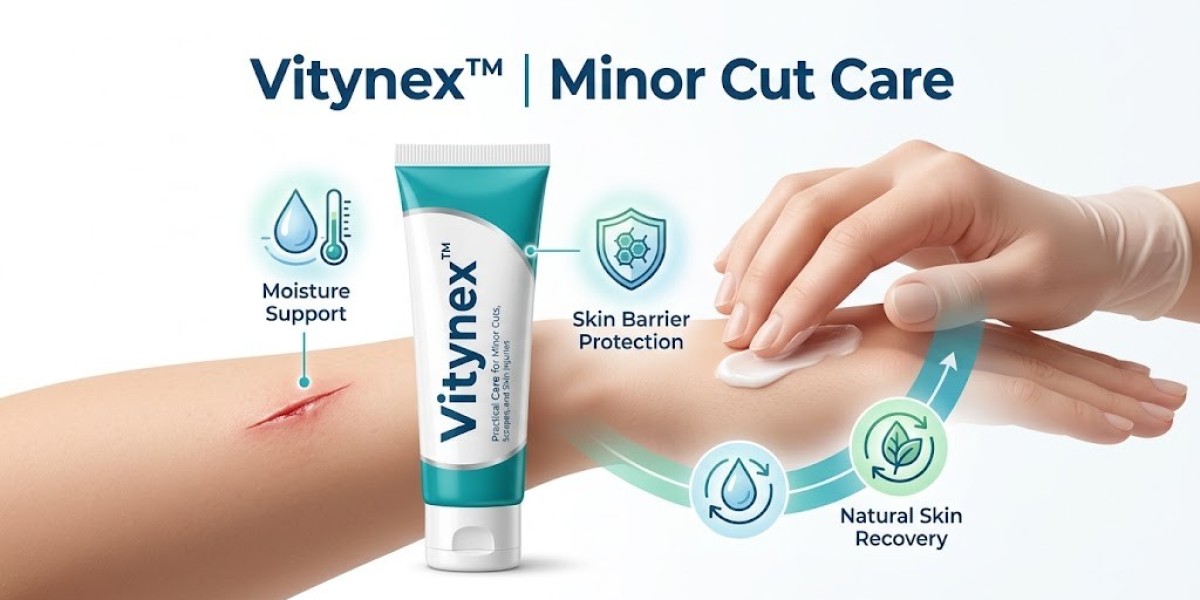

Minor cuts, scrapes, and everyday skin injuries are common, but proper care can make a meaningful difference in how comfortably the skin recovers. A skin cut healing cream may be incorporated into a simple wound-care routine when appropriate, alongside cleaning, protection, and monitoring. Understanding how to care for an injury and when professional medical attention is needed can help support a safer recovery.
Understanding Minor Skin Injuries
Small cuts and scrapes can occur during household tasks, exercise, gardening, cooking, or other everyday activities. Although many minor injuries can be managed at home, the skin still needs a suitable environment to repair itself.
A fresh wound should generally be handled gently. Begin by washing your hands before touching the area. If the injury is minor, gently clean it according to appropriate first-aid guidance and remove visible dirt or debris without aggressively rubbing the damaged skin.
Why the Wound Environment Matters
The condition of the wound surface can influence the healing process. Excessive dryness can cause the surface to form a hard scab, while an appropriately protected and moist environment can support the movement of skin cells across the injured area.
Moisture, protection, cleanliness, and oxygen availability are important considerations in modern wound care. Cura Pep describes Vitynex™ Cream as being designed to maintain moisture while supporting oxygen exchange at the wound site.
Choosing an Appropriate Topical Product
When selecting a topical product for a minor injury, it is useful to consider its intended purpose rather than simply choosing a product based on marketing language. A suitable formula should be appropriate for the type and severity of the injury and used according to its directions.
A wound care cream can be one component of a broader approach to managing minor cuts and scrapes. Vitynex™ Cream is described by Cura Pep as a topical, calendula-based formula intended for minor cuts, scrapes, skin tears, and burns, while more complicated wounds may require clinician guidance.
Supporting a Moist, Protected Surface
A protected wound surface can help reduce unnecessary friction and exposure while the skin repairs itself. Depending on the injury, appropriate dressings or coverings may also be useful.
However, topical products should not be treated as substitutes for medical evaluation when an injury is severe. Deep punctures, heavy bleeding, infected wounds, and serious burns require appropriate medical attention rather than relying solely on an over-the-counter topical product.
How Topical Care Can Support Skin Recovery
The skin naturally progresses through several overlapping stages during wound healing. After an injury, the body responds to the damage, clears unwanted material, develops new tissue, and gradually strengthens the repaired area.
Products designed for wound support are intended to work alongside these natural processes. Cura Pep's product information emphasizes moisture retention and oxygen support as important elements of the environment Vitynex™ is designed to provide.
What to Look For in a Formula
When comparing healing creams for skin, consider factors such as the type of injury, intended application, ingredients, directions for use, and safety information. A product designed for minor cuts should not automatically be assumed to be suitable for every wound.
For example, Vitynex™ is described as a dermatologist-developed, calendula-based topical formula and is intended for external use. Cura Pep also states that chronic wounds such as certain pressure sores, diabetic foot ulcers, and venous leg ulcers should be managed with clinician guidance.
Practical Steps for Everyday Wound Care
A straightforward routine can help keep minor injuries protected while they recover. Start by washing your hands before providing care. Gently clean the affected area as appropriate, then follow the instructions for any topical product or dressing being used.
Avoid repeatedly touching, scratching, or picking at a healing wound. Friction can disturb fragile tissue and potentially prolong recovery. Keeping the surrounding skin clean and protecting the injury from unnecessary irritation can also make everyday activities more comfortable.
Protecting the Area During Recovery
Activities that repeatedly stretch or rub an injured area may interfere with comfortable healing. If possible, reduce unnecessary friction and protect the wound during activities that could expose it to dirt or repeated impact.
A healing skin cream may be used as part of a topical routine when its intended use matches the injury. Cura Pep positions Vitynex™ as a topical product that soothes the affected area, retains moisture, and supports oxygen exchange, while also providing specific warnings about wounds for which it is not intended.
When a Cut Needs More Than Home Care
Not every skin injury should be treated at home. A wound may require professional evaluation when it is deep, extensively damaged, contaminated, or showing signs that healing is not progressing normally.
Seek appropriate medical care for injuries involving uncontrolled or heavy bleeding, deep punctures, serious burns, or possible infection. Signs such as increasing redness, swelling, pain, or drainage should also be taken seriously.
Monitoring Changes in the Wound
Watching the wound over time is an important part of responsible care. A minor injury should generally show signs of gradual improvement rather than progressively worsening symptoms.
Cura Pep specifically advises stopping Vitynex™ use and consulting a clinician if redness, swelling, pain, or drainage becomes worse. The product is also not intended for infected wounds or third-degree burns.
Incorporating Topical Care Into a Simple Routine
Consistency can make everyday wound care easier. Instead of repeatedly changing products or applying unnecessary treatments, follow the directions of the selected product and keep the affected area appropriately protected.
A healing cream for skin should be viewed as one part of an overall care routine rather than a replacement for cleaning, protection, observation, or professional treatment when needed. For minor injuries, the goal is to provide an appropriate environment while allowing the body's natural repair processes to continue.
Keeping Expectations Realistic
Skin recovery takes time, and the rate can vary depending on the size and location of the injury, the person's overall circumstances, and whether complications develop. No topical product should be expected to make every wound heal immediately.
Cura Pep's Vitynex™ product information states that the cream is intended for minor cuts, scrapes, skin tears, and burns, while selected chronic wounds should be managed with clinician guidance.
Final Thoughts
Caring for a minor cut or scrape does not have to be complicated. Gentle cleaning, appropriate protection, observation, and a suitable topical product can form the foundation of an everyday wound-care routine.
When considering a topical option, focus on the product's intended uses, formulation, directions, and safety limitations. Cura Pep's Vitynex™ Cream is presented as a wound-care product designed around moisture retention and oxygen support and is specifically indicated on its product page for minor cuts, scrapes, skin tears, and burns.
Most importantly, recognize when an injury falls outside the scope of routine home care. Severe bleeding, deep wounds, infection, and serious burns require appropriate professional assessment. For ordinary minor injuries, a thoughtful and consistent approach can help support the skin as it works through its natural healing process.