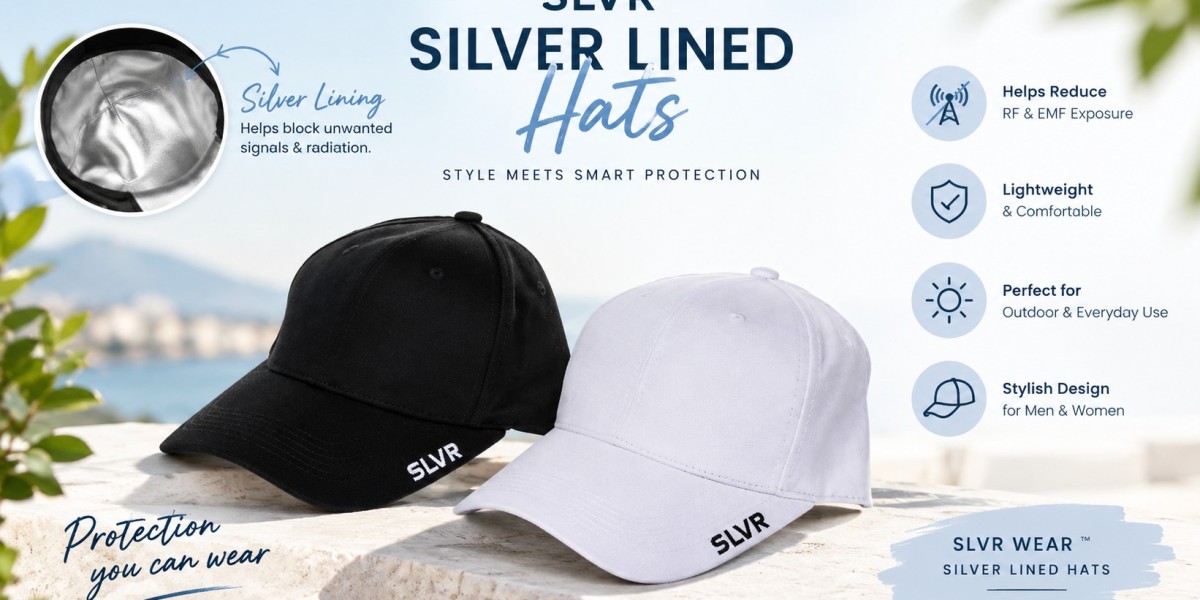

Wireless technology surrounds modern life. Routers fill our homes with WiFi, phones connect to towers, earbuds link through Bluetooth and smart devices chat with each other all day long. All of these rely on radio frequency, or RF, energy. It is no surprise that people have started asking how clothing and accessories might interact with it. That curiosity has pushed silver lined hats into the spotlight. This article explains the science in everyday terms, what RF energy is, why silver is such a powerful material for working with it, how shielding fabric behaves and what the limits are. By the end, you will understand how RF shielding hats and signal shielding hats really work and what to expect from them.
A Quick Primer on Radio Frequency Energy
Radio frequency energy is a type of electromagnetic radiation. It sits at the lowerenergy end of the electromagnetic spectrum, below visible light and it is the invisible carrier behind countless technologies. Radio and television broadcasts, cell networks, WiFi, Bluetooth, GPS and microwave ovens all use different parts of the RF range. Each technology operates at a particular frequency, measured in hertz. WiFi commonly uses frequency bands around 2.4 and 5 gigahertz. Cell networks use a range of bands from several hundred megahertz up into higher frequencies.
Because frequency determines how a wave behaves, shielding materials respond differently across the spectrum. RF energy is nonionizing, which means it does not carry enough energy per photon to strip electrons from atoms the way Xrays do. Public health agencies and standards bodies publish exposure guidelines and consumers who want to learn more can read those resources directly. The purpose of this article is not to make health claims. It is to explain how conductive fabrics interact with RF waves as a matter of physics.
The Faraday Cage Principle
The foundation of all RF shielding is the Faraday cage, named after the scientist Michael Faraday, who demonstrated the effect in the 1830s. A Faraday cage is a closed or nearly closed container made of conductive material. When an electromagnetic wave reaches it, the charges in the conductor move and redistribute, which cancels the field inside and redirects energy around the outside. You have likely experienced a version of this in daily life. Signals can weaken inside elevators, parking garages and buildings with metalheavy structures.
Airplanes act as a type of Faraday cage when lightning strikes, keeping the cabin interior protected as the charge flows along the outer skin.Fabrics with a conductive network can mimic that behavior in a flexible form. Instead of a solid sheet of metal, you have a mesh of conductive fibers. As long as the openings in the mesh are small compared to the wavelength of the signal, the fabric reflects and attenuates a large share of the energy.
Why Silver Is the Preferred Metal for Shielding Fabric
Several metals can shield RF energy, including copper, nickel and aluminum. Silver stands out for textile applications because of a few important properties.
First, silver has the highest electrical conductivity of any element. Better conductivity means the material responds more effectively to incoming electromagnetic waves.
Second, silver is highly malleable and ductile. It can be drawn into extremely fine strands or applied as a thin, even coating, which keeps the fabric light and flexible.
Third, silver resists certain forms of corrosion better than some other conductive metals, especially when properly bonded and cared for. That matters in a product that will see sweat, humidity and daily wear.
Finally, silver has a long record of use in textiles. This is a separate benefit from shielding, but it explains why silver fabrics are popular across apparel categories.These traits together explain why brands exploring signal shielding clothing and accessories so often choose silver fiber.
Facts at a Glance Hat Materials Compared
The following table compares common hat materials in terms of their relationship to RF energy. It is a general comparison to help you understand where silver fabrics fit.
Material | Conductivity | Typical Effect on RF Signals | Notes |
Cotton | Very low | Passes signals through | Soft and breathable, no shielding |
Wool | Very low | Passes signals through | Warm, no shielding |
Polyester / acrylic | Very low | Passes signals through | Durable, common in knit hats |
Copperbased fabric | High | Strong attenuation | Can tarnish, may feel stiff |
Nickelcopper fabric | High | Strong attenuation | Common in industrial shielding |
Silver fiber fabric | Highest | Strong attenuation | Flexible, soft, naturally antimicrobial |
The table shows why silver fabric is considered a premium option. It combines toptier conductivity with the softness needed for something you wear on your head.
Setting Realistic Expectations
Honest information is essential in this category. A hat is a partial covering, so it does not create a complete shield around a person. Shielding fabrics work best when they form an enclosure, which is why products like pouches and bags can show stronger results than wearables. It is also important to remember that shielding is a physical property of a fabric, not a health treatment. People choose RF shielding hats for many reasons, including curiosity about technology, a preference for conductive materials, or a desire to experiment with new fabrics. Brands should communicate those benefits clearly and avoid medical promises. If you want to understand your own surroundings, you can also learn about RF meters, which measure signal strength in a room. These tools help you see the actual fields around you instead of guessing.
Where Silver Lined Hats Fit in Daily Life
The practical appeal of silver lined hats is that they slip into everyday routines. You can wear one on a commute, in the office, at a coffee shop, or on a flight. Because the silver is built into the fabric, you do not need to carry extra equipment. Many wearers like the idea of a multipurpose item a warm beanie that doubles as an example of modern textile technology. For those who spend long hours in wirelessheavy places, wearing conductive headwear becomes a simple, loweffort habit. A welldesigned product from SLVR Wear™ follows this principle by pairing silver fiber fabrics with familiar silhouettes, so the technology never gets in the way of style or comfort.
Understanding Lab Testing and Claims
Because shielding is measurable, serious manufacturers invest in lab testing. Standard methods, such as those described in ASTM D4935 for planar shielding materials, measure how much a flat fabric sample reduces electromagnetic energy across a range of frequencies.
When you read a product description, look for these markers of credibility
The test method is named.
The frequency range is stated.
Results are presented as numbers, not just adjectives.
Limits are acknowledged, for example noting that results apply to the fabric and not necessarily to a worn garment in motion.
Brands that include this information are being transparent. Brands that rely on phrases like “military grade” or “maximum protection” without data deserve more scrutiny.
Silver Fabric Across the Product Range
Silver fiber technology is not limited to hats. The same material science appears in apparel, home textiles and accessories. For example, Silver Scrubs® brings silver infused fabric into scrubs designed for professionals who spend long shifts on their feet. Seeing silver used across clothing categories shows how adaptable the material is and it helps explain why a hat is a natural fit for the same technology. For shoppers focused specifically on headwear, a dedicated RF shielding hats product makes the choice straightforward. It is built around silver fiber fabric from the start, which removes the guesswork about whether the conductive layer is real.
Final Thoughts
RF shielding hats rely on a straightforward piece of science conductive materials interact with electromagnetic waves. Silver, the most conductive of all elements, can be built into soft, flexible fabric that looks like ordinary headwear. A signal shielding hat made with quality silver fiber, honest testing and thoughtful design is a fascinating example of how old metallurgy and modern textiles come together. Choose products with clear specifications, treat them as fabric technology rather than medical gear and care for them well. With that approach, silver lined hats can be a useful and stylish part of your everyday wardrobe.
Frequently Asked Questions(FAQs)
How do RF shielding hats work?
They use fabric containing conductive silver fibers. The conductive network reflects and absorbs part of the radio frequency energy that reaches it, similar to the principle of a Faraday cage.
What is the difference between RF shielding hats and signal shielding hats?
The terms are used interchangeably. Both describe hats made with conductive fabric that interacts with radio frequency signals.
Why is silver used instead of other metals?
Silver has the highest electrical conductivity of any element, it can be drawn into very fine fibers and it is flexible enough to be woven into soft fabric.
Does a hat block all signals around me?
No, A hat covers only the head area, so it is a partial covering. Shielding is strongest when conductive material forms a complete enclosure.
What does shielding effectiveness mean?
It is the measure of how much a material reduces the strength of an electromagnetic signal, expressed in decibels. Higher numbers indicate more attenuation.