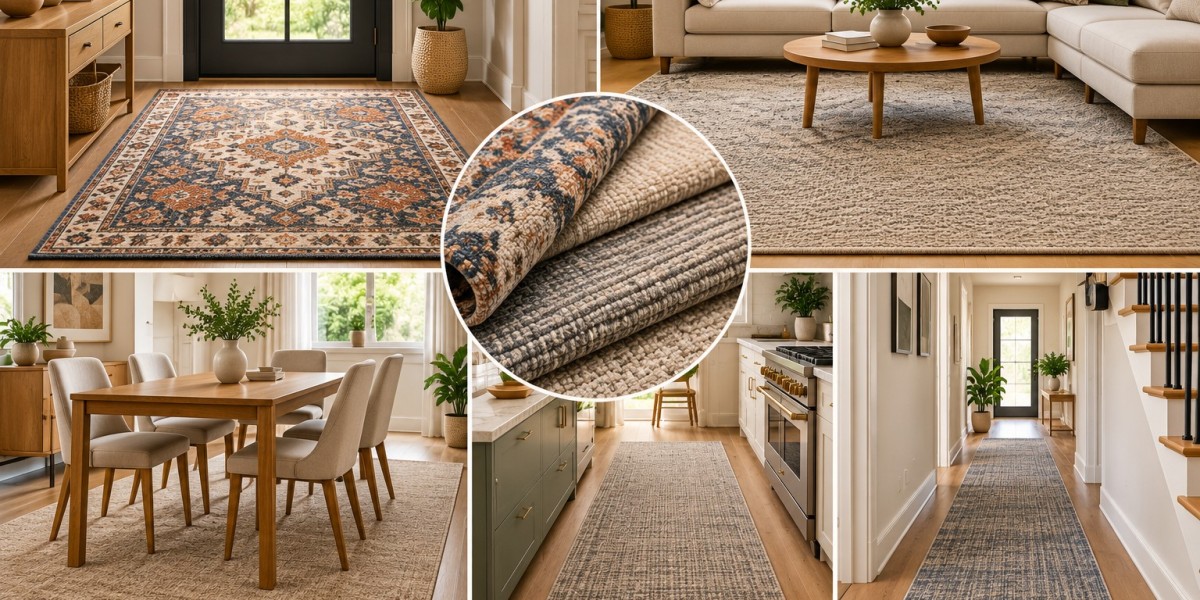

The right rug placement depends on the room. In living rooms, place the front legs of furniture on the rug. In dining rooms, keep all chair legs on the rug—even when pulled out. In bedrooms, position the rug under two-thirds of the bed. Match the rug size to your space, and you'll instantly pull a room together.
Indoor rugs do more than cover floors. They define spaces, soften acoustics, add warmth underfoot, and tie a room's design together. But a great rug in the wrong spot can throw off an entire room. Placement matters just as much as the rug itself.
Many people buy a rug that's too small, then push it into a corner or float it awkwardly in the middle of a room. The result feels off, even if they can't say why. The good news? A few simple rules fix this fast.
This guide walks you through rug placement room by room. You'll learn how to size rugs correctly, balance them with your furniture, and choose pieces that last for years.
General Principles of Rug Placement
Before we go room by room, here are four rules that apply everywhere.
How do I choose the right rug size?
Size is the most common mistake people make. A rug that's too small makes a room look cramped and disconnected. As a rule, leave 10 to 18 inches of bare floor between the edge of your rug and the walls. This creates a clean border and makes the room feel larger.
How do I balance a rug with my furniture?
Proportion keeps a room from feeling lopsided. A large rug needs to relate to the furniture around it. In open spaces, a bigger rug usually works better than a small one. When in doubt, size up.
Why does traffic flow matter?
Think about how people move through the room. Rugs should sit where they won't bunch up or trip anyone. In busy areas, pick flatter, durable indoor rugs that can handle daily wear.
How do rugs anchor a room?
A well-placed rug acts like a frame. It groups your furniture into one unit and signals where a space begins and ends. This is especially useful in open-plan homes, where rugs can separate the living area from the dining area without walls.
Room-by-Room Guide to Indoor Rug Placement
Each room has its own needs. Here's how to get placement right in every space.
Living Room
The living room is where most people spend their time, so the rug needs to feel grounded. You have three solid options:
All furniture on the rug: Best for large rooms. Every piece sits fully on the rug, creating a luxurious, unified look.
Front legs on the rug: The most popular choice. The front legs of your sofa and chairs rest on the rug while the back legs stay off. This connects the furniture without needing an oversized rug.
Coffee table only on the rug: Works in smaller rooms or with a smaller rug. The coffee table sits centered on the rug while the seating stays off.
For most living rooms, the front-legs approach gives the best balance of style and value.
Dining Room
Dining rooms have one golden rule: all chair legs must stay on the rug, even when pulled out. Nobody wants a chair that tips or catches on a rug edge mid-meal.
To get this right, measure your table and add at least 24 inches on every side. This gives diners room to push back without sliding off the rug. A rug that's too small here ruins both the look and the function.
Bedroom
The bedroom is about comfort. You want something soft to step onto when you wake up. There are three popular placements:
Large rug under the bed and nightstands: A big rug covers the floor under the entire bed, including the nightstands. This gives the most warmth and the most polished look.
Two-thirds of the bed on the rug: The rug starts partway under the bed and extends out toward the foot. This is a smart, budget-friendly option that still feels plush underfoot.
Runners on either side of the bed: Two narrow runners flank the bed. This works well in smaller rooms or when you want to show off nice flooring.
Hallways and Entryways
These are your home's hardest-working spaces. Foot traffic is constant, so durability comes first. Choose tightly woven, low-pile indoor rugs that resist wear and clean easily.
A runner in a hallway guides the eye and defines the path. In an entryway, a rug sets the tone for your home and traps dirt before it spreads. Leave a few inches of floor on each side so the rug looks intentional, not jammed in.
Home Office
A home office rug should balance comfort and practicality. Place it under your desk and chair, with enough room for the chair to roll back without leaving the rug. If you use a rolling chair, pick a flat, low-pile rug so movement stays smooth. The rug also helps muffle sound during calls—a quiet bonus for anyone working from home.
How to Choose the Right Indoor Rug for Your Space
Placement gets you halfway there. The rug itself does the rest. Here's what to look for when you're ready to buy rugs.
Material and Durability
Quality material decides how long your rug lasts. Wool is durable, naturally stain-resistant, and soft. Silk adds shine and a luxurious feel, ideal for low-traffic rooms like bedrooms. For high-traffic zones, prioritize tight, sturdy weaves that hold up over time.
Style and Design
Your rug should work with your existing decor, not fight it. If your room already has bold patterns, a solid or subtle rug keeps things calm. If your space is neutral, a patterned rug adds character. Think about color, texture, and how the rug ties your furniture together.
Where to Buy Rugs You Can Trust
Buy from a source that knows craftsmanship. The Ambiente, based in Bhadohi—India's hub of handmade carpets—offers Handmade Rugs in India crafted with over 30 years of expertise. Their rugs blend traditional handweaving with modern design, and each piece is made by skilled artisans, including a workforce that is largely women weavers. When you invest in a handmade rug, you get a piece built to last and made with care.
How to Maintain Your Indoor Rugs
A good rug is an investment. Treat it right and it will look great for years.
Vacuum regularly to lift dirt before it settles deep into the fibers.
Rotate your rug every few months so it wears evenly and doesn't fade on one side.
Blot spills immediately—never rub, which pushes stains deeper.
Use a rug pad underneath to prevent slipping and reduce wear.
Schedule a deep clean once a year, ideally by a professional for handmade or delicate rugs.
These small habits protect your rug and keep your room looking sharp.
Bring Your Rooms Together with the Right Rug
Good rug placement changes how a room feels. Get the size right, match the placement to the room, and choose a rug built to last. Those three steps turn a flat space into one that feels finished and warm.
Take a fresh look at your own rooms. Is your living room rug too small? Does your dining rug fit when chairs are pulled out? Small adjustments make a big difference. And when you're ready to invest in a quality piece, handmade rugs offer beauty and durability you can feel underfoot every day.
Frequently Asked Questions
What size rug should I buy for my living room?
Measure your seating area and aim for a rug large enough to fit at least the front legs of all your furniture. For most living rooms, an 8x10 or 9x12 foot rug works well. Leave 10 to 18 inches of bare floor between the rug and the walls.
Should all furniture legs be on the rug?
It depends on the room and rug size. In large living rooms, placing all legs on the rug looks best. In dining rooms, all chair legs should stay on the rug even when pulled out. For smaller spaces, the front-legs-only approach saves money and still looks balanced.
Are handmade rugs worth the cost?
Yes, if durability and quality matter to you. Handmade Rugs in India, like those from The Ambiente, are crafted with traditional techniques and quality materials that last far longer than mass-produced options. They also add unique character to a room.
How do I keep a rug from slipping?
Use a rug pad underneath. A pad grips the floor, prevents bunching, and adds cushioning that reduces wear on the rug fibers. This is especially important in high-traffic areas and home offices with rolling chairs.
What's the best rug material for high-traffic areas?
Choose tightly woven, low-pile rugs made from durable materials like wool. These resist wear, clean easily, and hold their shape under constant foot traffic—perfect for hallways and entryways.